Text size

GPS tells you where the bus is. It does not tell you where the child is, who took them, or prove it later.

Rakshaks records every transfer of responsibility for a child on the school run — from the stop, to the bus, to the school, and into the hand of a named adult.

The bus is the setting. The child is the record. When a parent asks a question six months later, the answer is a timeline with times, places and names in it — not a phone call to a driver.

Custody record17 September 2026
Aarav S. · Class 4-B · Bus 11 · Route 3
Custody record — Aarav S. · Class 4-B · Bus 11 · Route 3
TimeEventPlace
07:41:12BoardedSector 12 stop
08:15:03Reached schoolMain gate
15:05:40BoardedSchool
15:20:58Got offSector 12 stop
15:21:30Handed overSunita Sharma (grandmother)

Every entry records device time and server time, the location, the person who acted, and how it was captured. The log is append-only — a correction is a new entry, never an edit.

Illustrative record. Not a real child.

The gap

A school is answerable for a child from the moment they leave home until they are back with their family. What it can actually see is the middle of that journey — and even that is a dot on a map.

Ask any front office the question parents actually ask: has my child reached school? The answer comes from a phone call to the driver, a paper register, or the class teacher after attendance. Three records that cannot be searched, cannot be audited, and disagree with each other under pressure.

And the moment nobody records at all is the one that matters most — who received the child at the stop. Uttar Pradesh already requires the outcome for its youngest students. No product in this category produces the record.

What the system does

Verified guardian handover

Parents register their authorised guardians in advance, with a photograph, and the school approves the list. At the stop, the conductor taps the person who is actually there. The parent is told who received their child, by name. If someone unrecognised arrives, the child does not step down until the parent confirms or your transport in-charge authorises it on their own name. If nobody is there, the child stays on the bus and comes back to school, and every step is logged.

Confirmation is mandatory for the youngest grades, recorded for middle grades, and senior students release on their own scan. You set the bands.

Inspection-ready by default

Route plans, travelling-student lists, staff police verification and medical fitness, female-attendant deployment, vehicle documents and CCTV retention — held as a live register rather than a filing cabinet. Expiry alerts at 60, 30 and 7 days. When an inspector arrives, your in-charge selects the dates and generates the pack.

Compliance rules are configured per state, so a change in your jurisdiction is an update, not a new system.

Alerts you can believe

A bus stopped outside a designated stop is a question, not an incident. Before anything reaches your in-charge, the system checks whether the bus has left its route, whether traffic is reported there, what the speed trace looks like, and whether it is stopped at a known junction. The driver has a one-tap button for a legitimate stop — breakdown, puncture, fuel, a road closed — which logs the reason and raises no alarm.

We flag; we do not accuse. If we must choose between catching everything and being believed, we choose being believed.

A parent who does not have to ask

Boarding, arrival, getting off and handover, delivered as plain messages with a time and a place in them. A live map during their own child’s trip. Their child’s full history. The ability to mark a planned absence, manage their guardian list, nominate a one-time receiver, and raise a concern that lands in your school’s queue instead of on your front-office phone.

Three messages a day is the target. Five trains a parent to mute the app, and nobody un-mutes.
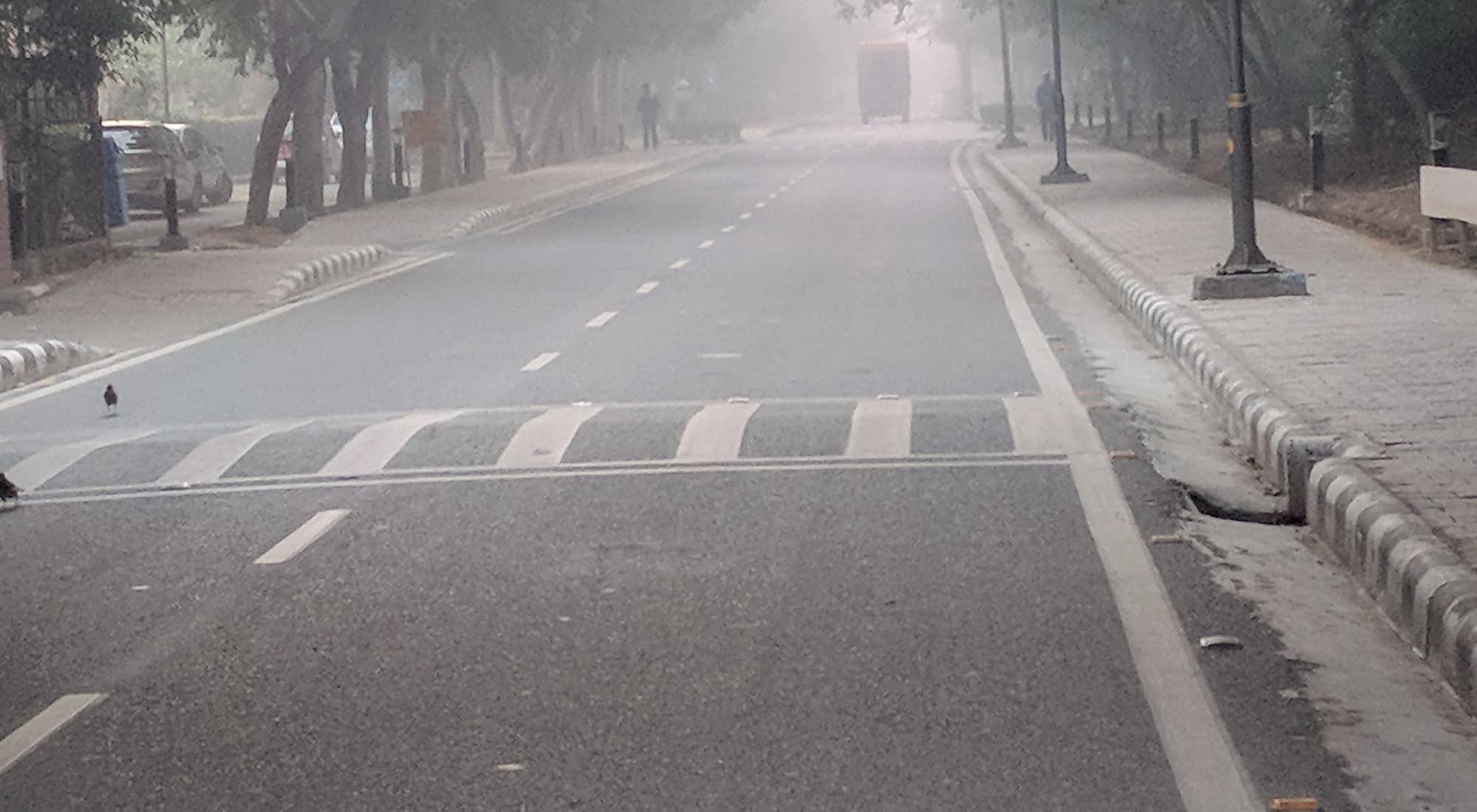
An empty road on a foggy winter morning in Delhi, with a bus faintly visible in the distance.

Six forty-five on a winter morning in Delhi. Fog, a bus somewhere ahead, and a parent who does not yet know whether it has been reached.

What a parent receives

The messages, in full. There is no separate list of things we send that is not on this page.

WhenWhat the parent is sent
Bus approaching the stopBus is about 10 minutes away.
BoardedAarav boarded at 7:42, Sector 12 stop.
Reached schoolReached school, 8:15.
Left schoolLeft school at 3:05.
Handed overHanded over to Sunita Sharma (grandmother), 3:21.
Running lateBus is running about 15 minutes late.
Not seen at the stopWe did not see Aarav at the stop this morning.
Nobody at the stopNobody was at the stop. Aarav is returning to school.
An ordinary dayNothing further.

A parent cannot see any other child, the bus outside their own child’s trip, your staff’s personal details, or your alert queue.

What your school sees

  • A custody board showing every child’s current state on one screen — waiting, on the bus, at school, dropped, handed over, or needing attention.
  • A live fleet view, with the age of every position shown on the map.
  • An alert queue that has to be acknowledged and closed, and an incident register where every incident closes with an outcome and a responsible person’s name.
  • Route, stop and student assignment for both directions, with substitution handling for a relief driver or a breakdown bus.
  • Staff and vehicle registers with document expiry alerts.
  • Oversight of a contracted operator’s fleet, where your buses are not your own.

One rule has no exceptions: no trip closes with a child unaccounted for. Not by anyone, not for any reason.

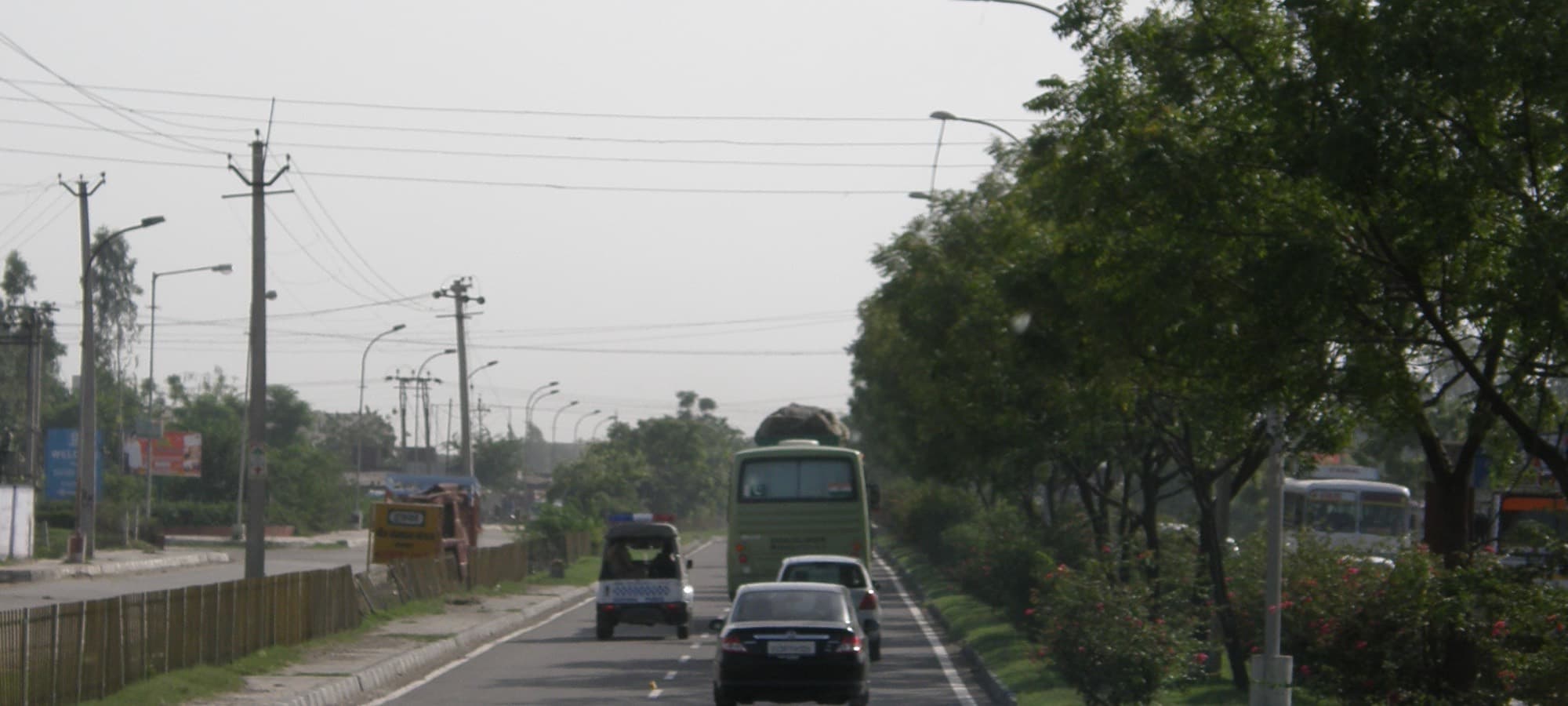
A highway on the outskirts of Delhi, with a bus and traffic in the middle distance.

A road on the edge of Delhi. Somewhere on it, a bus with forty children on board, and a school that is answerable for all of them.

Compliance

What the regulations require of a school, and what the system produces for each. Confirm the position for your own jurisdiction at the time of contracting.

RequirementWhere it appliesWhat Rakshaks produces
Route plans, stop lists and travelling-student lists in submission formatDelhi DoE · UP transportGenerated from live route data, for any date
Driver and attendant police verification, licence and medical fitnessCentral · CBSERegister with expiry alerts at 60, 30 and 7 days
Female attendant on vehicles carrying girl studentsWhere mandatedDeployment record, per vehicle, per trip
CCTV recording and retention in school busesDelhi · Uttar PradeshRetention status per vehicle against the local minimum
AIS-140 vehicle tracking with a panic buttonCentralDevice health per bus — a bus that stops reporting is an incident
Digital boarding attendance and a parent applicationMaharashtra’s 2026 amendment — the likely blueprint elsewhereCustody log per child, per trip, immutable
Lawful processing of a child’s personal dataDigital Personal Data Protection Act, 2023Consent record, data minimisation, Indian residency, access log

What this system does not do

Stated so that nothing is assumed.

  • No artificial intelligence applied to children. No face recognition, no behaviour or mood detection, no scoring of any student or driver.
  • No tracking of a child after handover. Our record ends where your school’s responsibility ends.
  • No app, tracker or wearable on a child, and no student login. A child carries the school ID card they already carry.
  • No campus entry and exit, visitor management, field trips or after-school activity tracking.
  • No route optimisation or fuel-savings engine. We plan routes; we do not sell cost reduction.
  • No school ERP. We integrate with yours.
  • No parent-paid product. Your school is the customer. Parents are never billed and are never sold anything.

CCTV is mandatory in school buses in Delhi and Uttar Pradesh. We record and retain it, and retrieve it when there is an incident. We do not run inference on it.

How a school starts

A pilot, on your real routes, with success measures agreed in writing before it begins.

  1. 01Pilot agreementRoutes selected and success measures agreed in writing.
  2. 02School setupStudent and fleet data imported and validated. Your jurisdiction’s compliance rules activated. Parental consent captured.
  3. 03InstallationDevices fitted, or the feed from the device you already have connected. A verification trip on every bus.
  4. 04Routes and stopsRoutes drawn, stops geofenced, timings set.
  5. 05Students and guardiansEvery child mapped to route, stop and bus in both directions. ID codes issued. Guardian lists registered and approved.
  6. 06StaffDriver, conductor and attendant records with documents and expiry dates.
  7. 07ParentsInvitations issued by your school. Accounts activated. Never self-signup.
  8. 08Go-liveA supervised first week, with a named person from our side present.

We do not go live on incomplete data. Your import clears validation first — this is the most common reason these systems fail, and the failure is not recoverable later.

Stop geofences are tuned over the first fortnight. Stops in dense areas need adjustment against real traffic. This is planned work, not a fault.

Arrange a demonstration

Forty-five minutes, at your school, with your transport in-charge in the room. We will use your routes, not a sample.

Email: connect@coachingle.com

Coachingle Technologies Private Limited

Accessibility